Water Damage Restoration Poway, CA
24/7 water damage restoration in Poway, CA. The restoration team extracts standing water, dries slabs, walls and attics to the IICRC S500 standard and documents every step for your insurance claim.
(888) 450-9281Water on the tile right now? Call dispatch
What to do while the water is still moving
- No. 1Close the main valve. Shut the house valve where the supply pipe enters the home, or the meter valve at the street if the house valve sticks.
- No. 2Cut power to wet rooms. Switch those circuits off at the breaker, but only if the panel and the floor around it are dry.
- No. 3Stay clear of outlets. Keep out of standing water near cords, power strips and floor outlets.
- No. 4Photograph everything. Take photos and video of every wet room before anything moves; the claim file starts with them.
- No. 5Lift, then call. Raise rugs, boxes and electronics off the floor, then call for extraction.
Drywall, carpet pad and baseboards start wicking water in the first few hours, and mold can begin growing inside 24 to 48 hours, so the first day decides how much gets saved.
Water Damage Restoration Services in Poway, CA
From the first extraction pass to the last moisture reading, the local water damage experts handle water and sewage losses for homes and businesses across the city and inland North County.
 Emergency Water ExtractionTruck-mounted extraction pulls standing water off tile and carpet before it slips under walls and cabinets.See emergency water extraction
 Slab Leak Water DamageWarm spots and wet carpet over a hidden copper leak, traced, opened and dried down to the concrete.See slab leak water damage
 Burst Pipe and Pinhole Leak CleanupSudden splits and slow pinholes inside walls and ceilings, extracted and dried one cavity at a time.See burst pipe and pinhole leak cleanup
 Sewage and Septic Backup CleanupSewer lateral and septic tank backups contained, stripped and treated as Category 3 from the start.See sewage and septic backup cleanup
 Storm Runoff and Flash Flood CleanupWinter runoff off granite slopes and creek overflow pumped out and dried as contaminated water.See storm runoff and flash flood cleanup
 Roof Leak Water DamageTired underlayment beneath tile and shingle roofs, with wet insulation pulled and the decking dried.See roof leak water damage
 Ceiling Leak Water DamageUpstairs bath and supply leaks that stain and sag drywall, opened safely and dried from above.See ceiling leak water damage
 Water Heater Leak CleanupGarage and closet tanks worn by hard water, extracted before drywall and stored boxes soak it up.See water heater leak cleanup
 Appliance and Hose Leak CleanupWasher hoses, dishwashers, ice makers and toilet connectors, dried out of floors and cabinet bases.See appliance and hose leak cleanup
 AC Condensate Leak Water DamageClogged drains and overflowing pans on attic air handlers, with ceilings and insulation dried.See ac condensate leak water damage
 Structural Drying and DehumidificationFraming, slab edges and wall cavities dried with air movers and LGR units until the readings say dry.See structural drying and dehumidification
 Commercial Water DamageShops, offices, clinics and business park suites dried in phases to keep the doors open.See commercial water damage
Four things every dry-out here gets, start to finish
The same four commitments run through every job, whether the water came up through a slab, down through a ceiling or back up a drain.
- 1
Rapid local response
The response team dispatches around the clock, and active water is treated as urgent at any hour, holidays included.
- 2
IICRC S500 drying standard
Structural drying, not just surface drying, with air movers and LGR dehumidifiers sized to the class of the loss.
- 3
Claim-ready documentation
Moisture maps, daily psychrometric logs and timestamped photos taken before any demolition.
- 4
Local water know-how
Slab leaks, septic backups, tile roof leaks and winter runoff off the hillsides lead the list here.
Water damage dried to the IICRC S500 standard
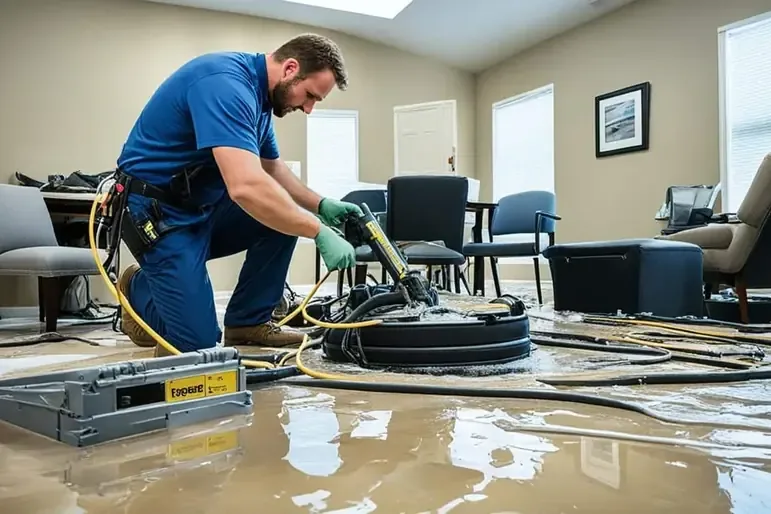
Structural drying, not just surface drying: the drying team dries the slab edge, the bottom plate and the wall cavity, not only the carpet you can see.
- Day 1: extract and map
Water out, moisture map drawn, wet pad and baseboards pulled where readings call for it, equipment placed.
- Days 2 to 3: daily readings
The drying team logs readings on every visit and moves air movers as areas reach the goal.
- Days 3 to 5: most contained losses dry
A Class 1 or 2 loss over a slab usually reaches the goal in this window.
- Longer for concrete and hardwood
A wet slab, engineered wood or plaster takes more days, and desiccant units may join the LGR dehumidifiers.
The finish line
Equipment stays until the readings say dry, not until the room looks dry. The target is every wet material within 2 to 4 points of a dry reference in the same house.
All water damage categories covered in Poway, CA
Category 1, clean water
Supply pipes, slab leaks, water heaters and ice makers. Dried in place when drying starts early enough.
Slab leak water damageCategory 2, gray water
Washers, dishwashers and AC overflow. Soaked pad and other porous materials usually come out before drying.
Appliance and hose leaksCategory 3, black water
Sewage, septic overflow and storm runoff. Contained, porous materials removed, EPA-registered antimicrobial applied.
Sewage and septic cleanupWhat does water damage restoration cost in Poway, CA?
Water damage restoration here typically runs $800 to $12,000 or more, depending on the water category, the wet square footage, the material class, whether a slab or wall must be opened and how fast drying started.
Contained leak
- One room, clean water
- Extraction and air movers
- Three to five days of drying
Several rooms or a slab leak
- Wall cavity and slab drying
- Pad and baseboard removal
- Daily moisture readings
Sewage, septic or storm water
- Category 3 removal
- Antimicrobial treatment
- Extended structural drying
Run the water damage cost calculator for a closer planning range. Rebuilding, such as new drywall, paint and flooring, is priced on its own once the structure reads dry.
Documentation for your insurance claim
Water claims are decided on the file. The mitigation team builds that file from the first reading, so the adjuster can see what was wet, how it was dried and when it reached the goal.
Sudden and accidental discharge, like a split supply hose or a slab leak, is often handled differently from storm runoff, which usually falls under flood insurance. Getting to a slab leak and fixing the pipe may sit under separate policy terms.
Coverage depends on your policy, so check with your own insurer before work beyond emergency mitigation starts.
What the claim file contains
- A moisture map drawn on day one
- Daily psychrometric logs and material readings
- Timestamped photos taken before any demolition
- The water category and class of the loss
- An equipment record and an itemized scope
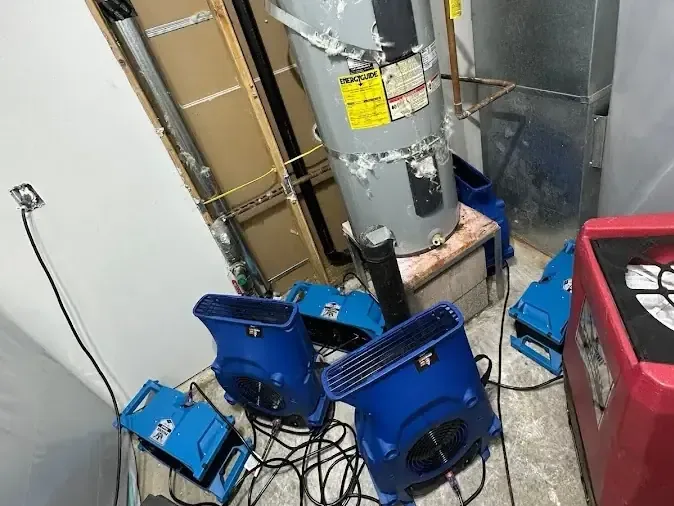
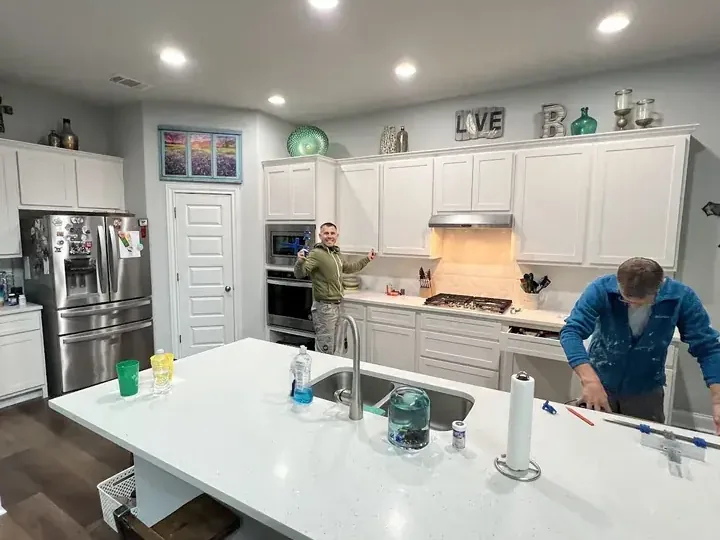
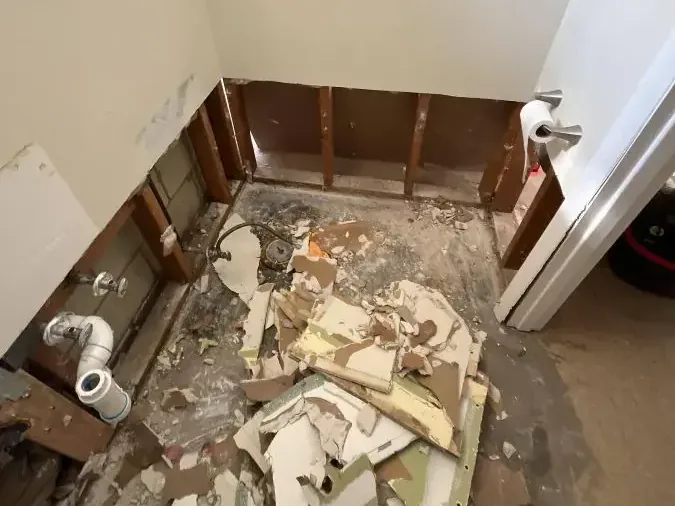
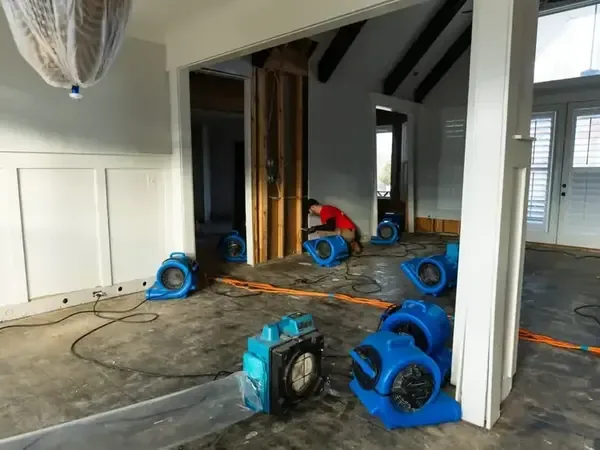
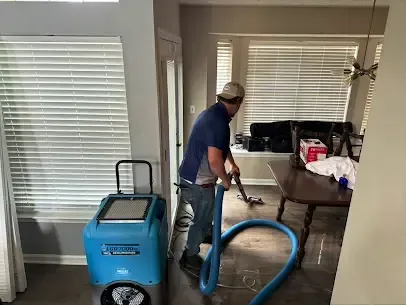
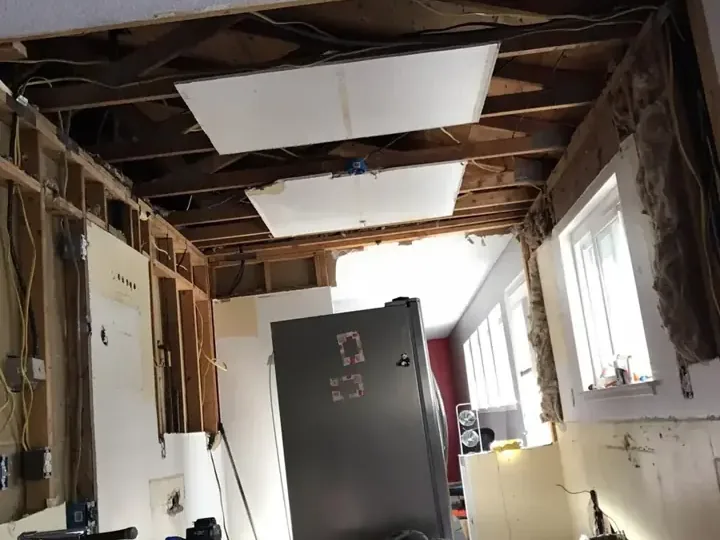
What a water damage dry-out looks like up close
Water damage restoration across Poway and inland North County
One call reaches Poway water damage pros, 24/7
The response team runs around the clock, weekends and holidays included, and sends the extraction crew with the equipment the loss needs.
Poway, CA · San Diego County · [email protected]
Describe the leak to a local pro Find us on Google See every area coveredNeighborhoods
- Old Poway
- Green Valley
- Garden Road
- Twin Peaks
- Old Coach
- Silverset
- High Valley
- Sycamore Canyon
Roads and corridors
- Poway Road
- Espola Road
- Pomerado Road
- Twin Peaks Road
- Midland Road
- Scripps Poway Parkway
Nearby communities
- Rancho Bernardo
- Rancho Peñasquitos
- Sabre Springs
- Carmel Mountain Ranch
- Scripps Ranch
- Ramona
- Escondido
Water damage in Poway, CA: the local risk profile
Water losses here follow the housing, the hills and a short, wet winter.
- Slab homes. Much of the city was built from the 1970s to the 1990s on concrete slabs, with copper supply pipe running under the floor where a pinhole leak stays hidden.
- Pipe and water. Hard imported water scales up tanks and valves, and some homes from that era still carry gray polybutylene supply pipe.
- Hot summers. Long AC run times work attic air handlers hard, and a clogged condensate drain empties into the ceiling below.
- Winter storms. Most rain falls from November to March in a few heavy storms, so Poway Creek and Rattlesnake Creek rise fast and decomposed granite slopes send runoff toward slabs and sliders.
- Rural lots. Some larger lots in the north and east run on septic systems, and a failed tank or a saturated leach field backs up into the house.
Poway water damage questions, answered
How fast should water damage be dealt with?
Treat it as urgent. Drywall, pad and baseboards start wicking water in the first few hours, and mold can begin growing on wet materials inside 24 to 48 hours. The response team dispatches 24/7 so extraction can start as early as possible.
What should I do first when water is coming in?
Close the main valve, switch off power to wet rooms at the breaker if the panel is dry, stay out of standing water near outlets, photograph the damage before moving anything and lift rugs and valuables off the floor. Then call.
How do I know if I have a slab leak?
Common signs are a warm spot on tile or wood, damp carpet with no visible source, the sound of running water with every fixture off and a water meter that keeps turning. The walkthrough confirms the wet area with meters and thermal imaging before anything is opened. The slab leak water damage page covers what happens next.
Is water damage covered by homeowners insurance?
Sudden and accidental discharges, such as a split supply hose or a failed water heater, are commonly covered. Rising storm runoff usually falls under flood insurance instead, and sewer or septic backup often needs its own endorsement. Coverage depends on your policy, so check with your own insurer.
Why does a septic backup count as sewage?
Septic overflow carries the same bacteria as a sewer backup, so it is Category 3 water from the start. Porous materials it touched are removed rather than dried, and the area is contained, cleaned and treated with an EPA-registered antimicrobial before drying.
How long does it take to dry a house after a leak?
A contained Class 1 or 2 loss usually dries in three to five days. A wet slab, engineered wood or plaster takes longer. Equipment leaves when readings reach the drying goal, not on a set date.
What is the IICRC S500?
The IICRC S500 is the industry standard for professional water damage restoration. It sets out how water losses are inspected, categorized, extracted, dried and verified dry with moisture readings.
Does wet drywall always have to be cut out?
No. Drywall wet with clean water and dried quickly can often stay. Drywall touched by sewage or storm runoff, or that swelled or stayed wet too long, comes out, usually as a straight flood cut.
How is the cost of water damage restoration worked out?
The drivers are the water category, the square footage that got wet, the material class, whether a slab or wall must be opened and how fast drying started. The cost calculator gives a typical planning range.
What is the difference between mitigation and repair?
Mitigation stops the damage: extraction, removal of materials that cannot be saved and structural drying. Repair, such as new drywall, paint and flooring, follows once the structure reads dry.
Water in your Poway home? Call before it reaches the slab edge.
The extraction crew pulls the water, the drying team dries to the IICRC S500 goal and the file goes to your insurer, any hour of any day.
(888) 450-9281Start the slab-to-ceiling dry-outPoway Water Damage Restoration
San Diego County, California
Open 24 hours, holidays included
Find us on Google